LensCap restructures AR applications so visual processing and network access are separated, giving people meaningful control over what visual data can leave their device.
Introduction: Visual Privacy in AR
AR applications continuously capture a user’s physical environment. When an app also has network access, camera frames and derived visual information can be collected without meaningful user awareness or control.
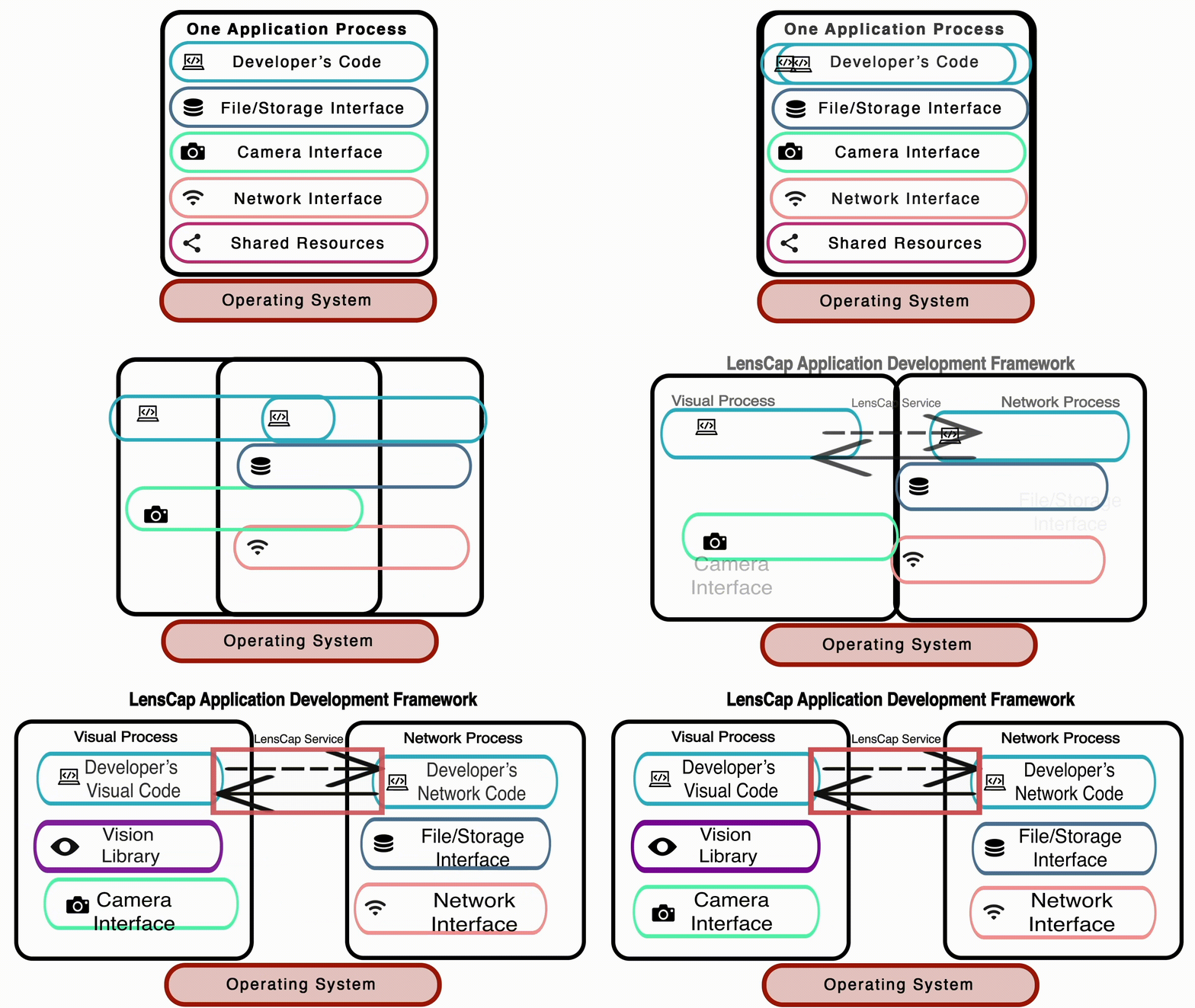
System Architecture: Separating Vision From Connectivity
LensCap divides an AR application into a visual process that can operate on camera frames but cannot access the network, and a network process that can communicate externally but cannot access the camera. It monitors the transactions between them and presents those choices to the user at a fine granularity.

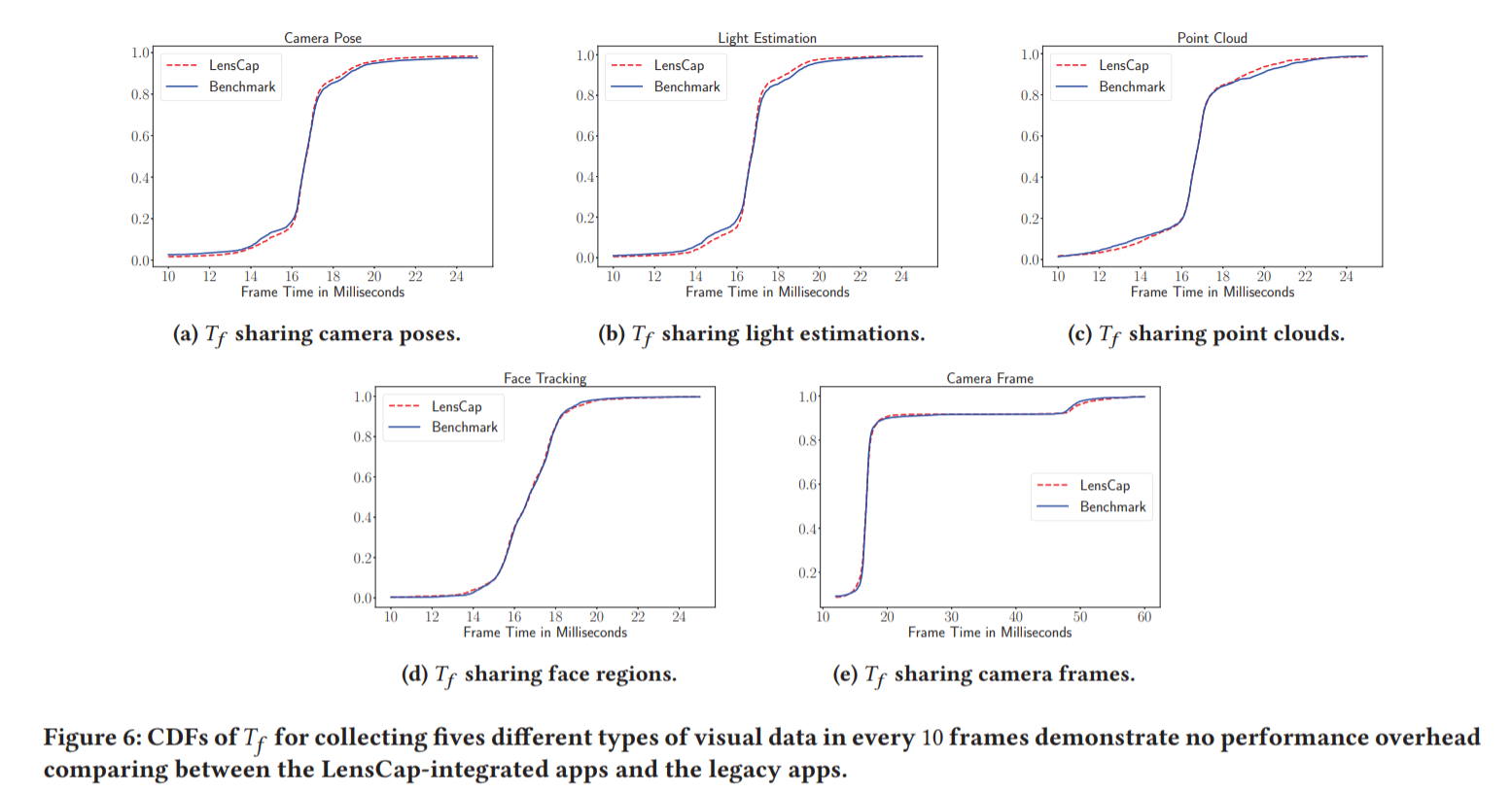
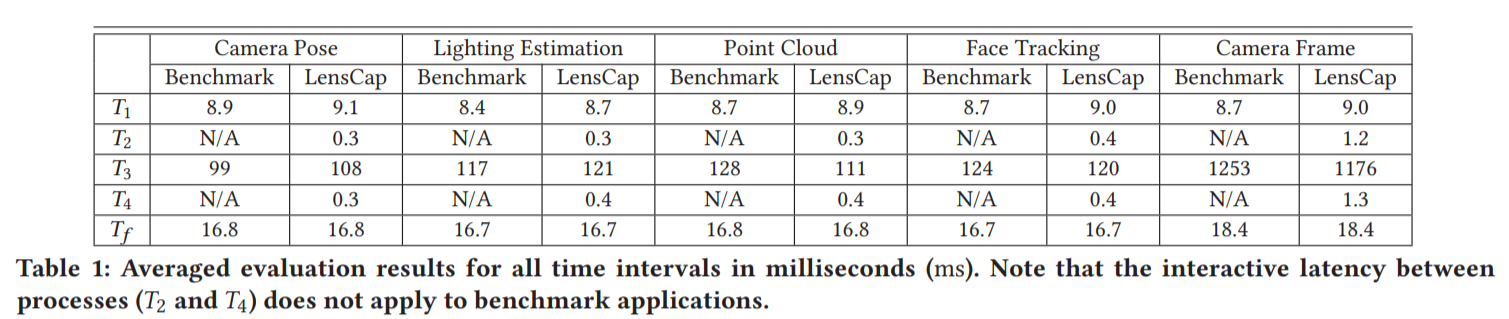
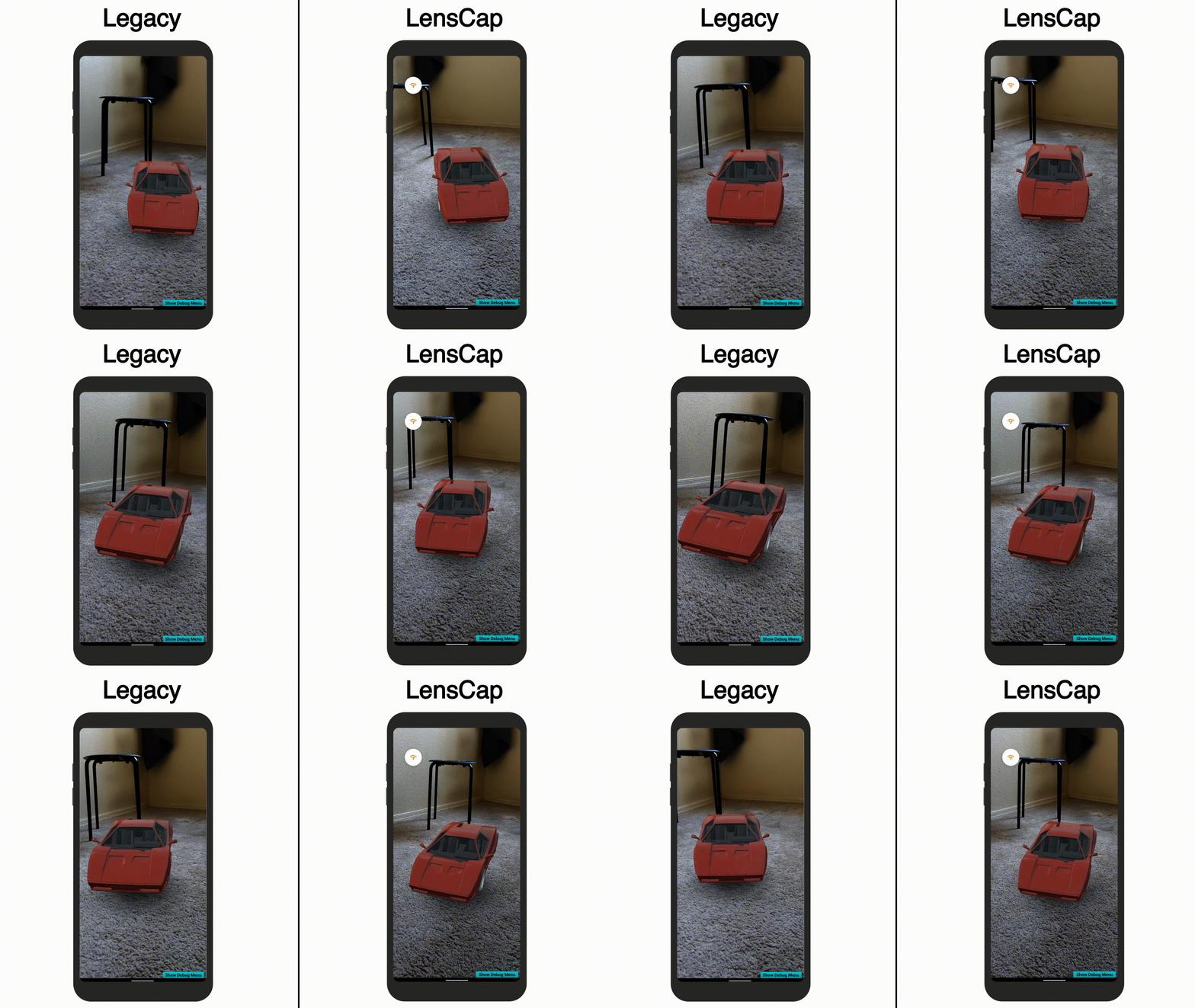
Results: Control Without Disrupting AR
The framework supports expressive on-device visual processing while allowing people to decide which forms of data are sent to the network. Its Android-library prototype and Unreal Engine plugin preserve visual privacy with an insignificant latency penalty in evaluated AR applications.