
Augmented Coach brings spatial understanding to remote sports coaching, transforming recorded movement into an immersive, annotatable 3D resource that coaches can inspect from every useful angle.
Introduction: Remote Coaching Needs Spatial Context
Video calls and recorded clips help athletes and coaches connect across distance, but they flatten movement into a single viewpoint. Augmented Coach captures and visualizes spatial motion data so coaches can inspect athletic performance beyond the limits of conventional video feedback.
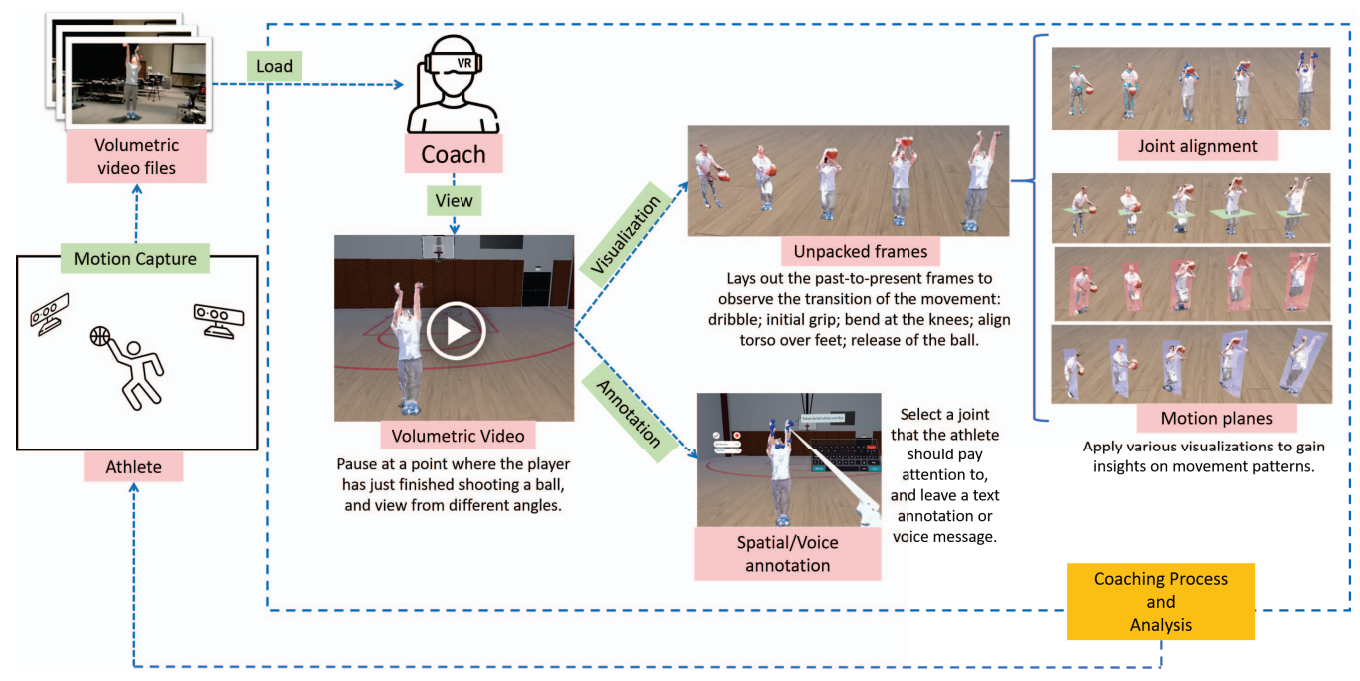
System Architecture: Motion Annotation in 3D
The platform supports 3D spatial visualization, allowing coaches to examine athletes from different angles and to surface kinesthetic information such as skeletal alignment, motion timing, and body-force cues. Coaches can annotate the volumetric scene to provide targeted feedback and adjustments.
Impact: More Specific Coaching Feedback
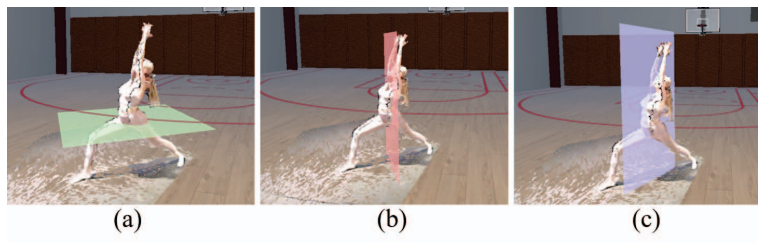
Coaches found the ability to inspect movements frame by frame in 3D particularly helpful. Features such as joint alignments and motion planes support the identification of misalignments and body-weight shifts, making technical feedback more specific than it can be in a conventional remote session.
Future Work: Broader Sports and More Precise Tools
Future iterations will improve the clarity and precision of interactive controls, including explicit coordinate and angle measurements, and extend reliable tracking to a broader range of sports and more dynamic movements such as running and jumping.